For decades, real estate was the natural foundation of wealth building for the middle classes. That model is weakening. In major cities, where jobs and income are concentrated, access to homeownership has become much more difficult. As real estate loses this role as the starting point for wealth accumulation, financial assets are taking on a growing importance. This shift is reshaping both households' financial culture and their need for serious tools to manage their wealth.
Housing crisis: why real estate has become far less accessible
Between 1950 and 2000, real estate was the classic path to building wealth. Buying a primary residence, and then possibly a second property, made it possible to build capital in a gradual, understandable, and socially valued way. That model has weakened.
In many countries, housing now takes up a much larger share of household budgets. Prices in major cities, where jobs and economic activity are increasingly concentrated, have surged. It is now necessary to speak of a housing crisis in most Western metropolitan areas.
For many working people, and especially for younger generations, gaining access to homeownership now requires a much higher level of down payment, income, or professional stability than it once did. This is profoundly changing the way households think about their financial future.
Stocks, ETFs, bonds, crypto: financial assets are taking over
Other asset classes are therefore stepping in to replace real estate. This shift mechanically favors financial assets: stocks, ETFs, bonds, money market instruments, and, for some savers, cryptoassets as well.
This movement is already visible. More and more people are trying to build capital without waiting until they are able to buy property. Financial markets offer several advantages in this respect: a lower entry threshold, greater flexibility, higher liquidity, and the ability to invest gradually, month after month, without tying up large sums from the outset.
This shift is significant. It means that an increasing share of households' future financial security will depend less on owning property and more on their ability to save, invest, arbitrate, and monitor portfolios of financial assets.
On the broader role of investment in retirement preparation across Europe, see: Retirement, Investment, and Europeans' Trust in the Future
The rise of financial assets will strengthen financial literacy
This shift will not be culturally neutral. Understanding the difference between precautionary savings and long-term investing, between diversification and concentration, between volatility and permanent loss, between a marketing promise and actual risk: all of this will become more important than before. Where homeownership could sometimes function as a relatively simple wealth framework to understand, financial assets require more reference points, more discipline, and more knowledge.
This evolution can be positive. It can foster greater autonomy, a more active relationship with saving, and a better understanding of basic economic mechanisms. It can also encourage a broader vision of wealth, one that is less centered on a single illiquid, localized asset.
But it also has a downside. Without a rise in competence, the growth of financial assets can also expose people more to mistakes, biases, fads, and poor products. A society in which households invest more will need better financial literacy, not just encouragement or pressure to invest.
Why the rise of financial assets also requires better tools
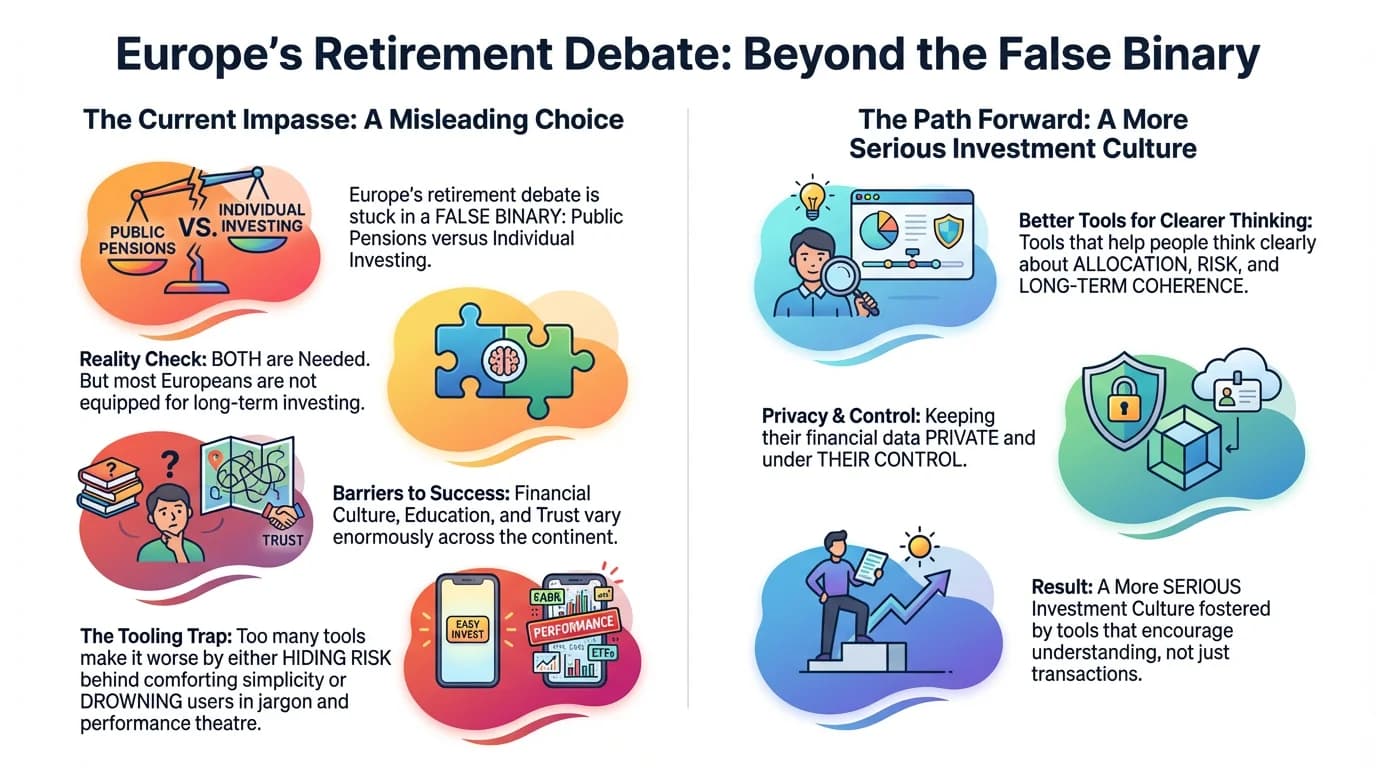
If financial assets are playing a growing role in wealth building, then the tools used to track them cannot be approximate. The more investing becomes central to households' life trajectories, the more people need tools that are up to the task: clear, rigorous, readable, and genuinely designed to support better decisions.
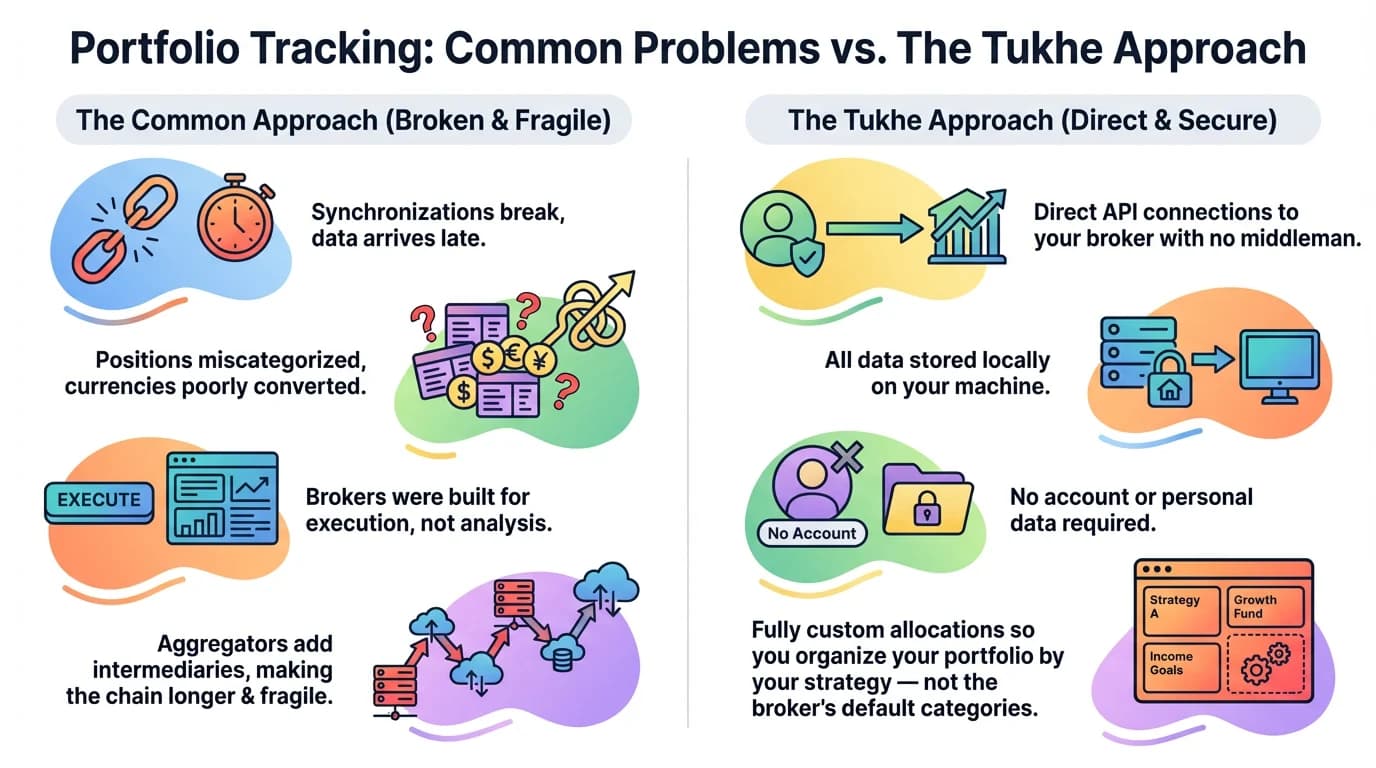
Yet many of today's tools remain incomplete, too superficial, and too dependent on arbitrary categorizations or fragile synchronizations. They sometimes create an illusion of visibility without providing real control. That is a problem if we consider that, for a growing share of the population, financial portfolios are being called upon to partially replace the structuring role that real estate once played in wealth construction.
Tracking assets seriously means being able to consolidate multiple accounts, clearly distinguish between asset classes, understand exposures, measure performance, and organize one's wealth according to one's own logic rather than the logic imposed by a standardized interface.
For a practical comparison of the portfolio trackers available to European investors today, see: Best Portfolio Trackers for European Investors in 2026 — Compared
Tukhe: a tool designed for serious financial wealth tracking
It is precisely in this context that Tukhe makes sense. If financial wealth is partially replacing real estate in households' economic trajectories, then people need tools designed not as gadgets, but as a personal infrastructure for tracking and managing their wealth.
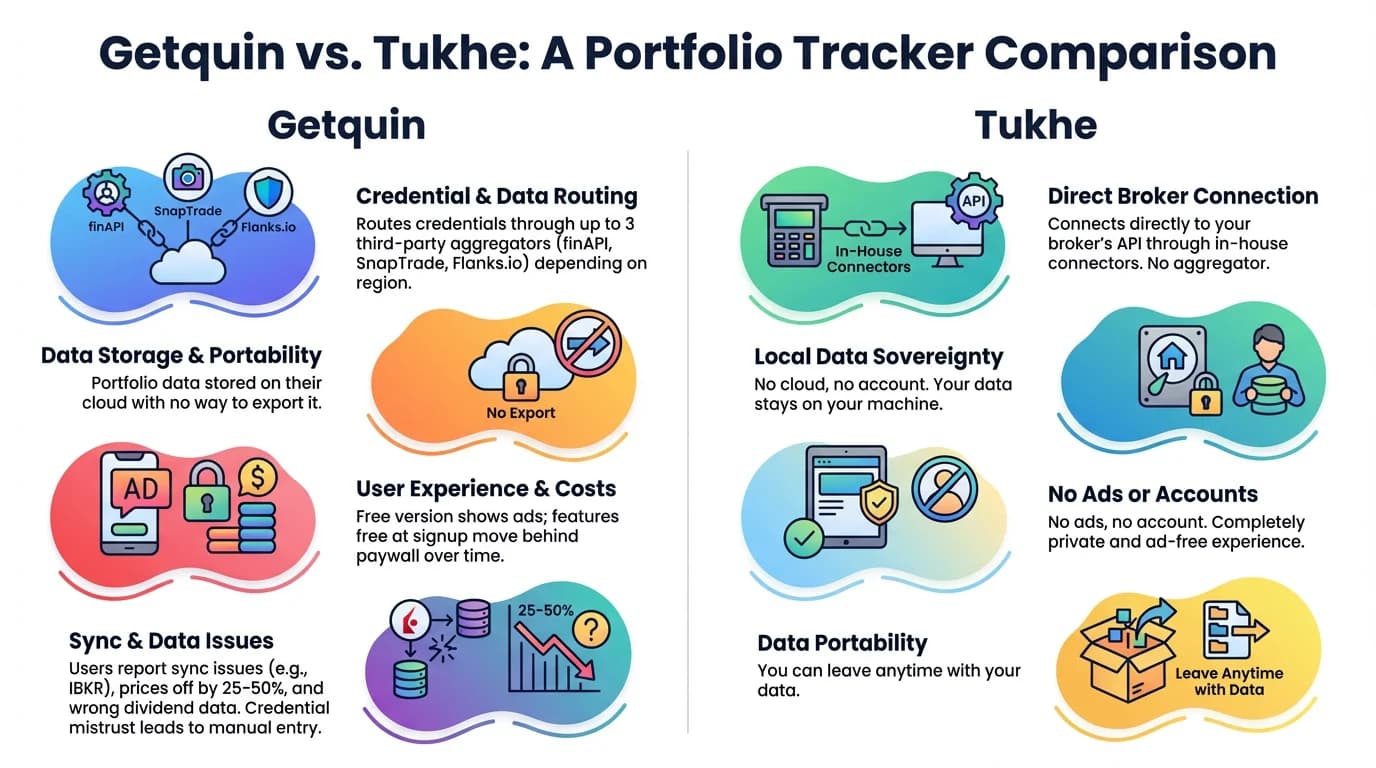
Tukhe connects directly to broker APIs (IBKR, Saxo, Kraken), without routing data through third-party aggregators whose synchronizations are often fragile — a structural problem that even the major players in the market publicly acknowledge. All data stays on your machine. No account is required. The application is anonymous.
Allocations are fully customizable: you organize your portfolio according to your strategy, not according to the categories imposed by a broker or a platform. Multi-currency positions, manual positions for assets held outside supported brokers, and real-time data depending on your broker subscription. This is a tool built for investors who take their financial wealth seriously — because that wealth now plays a role that real estate can no longer fill alone.
To understand why local-first architecture changes the game for privacy and security in portfolio tracking, see: Why Local-First Portfolio Tracking Is More Private and More Secure in 2026